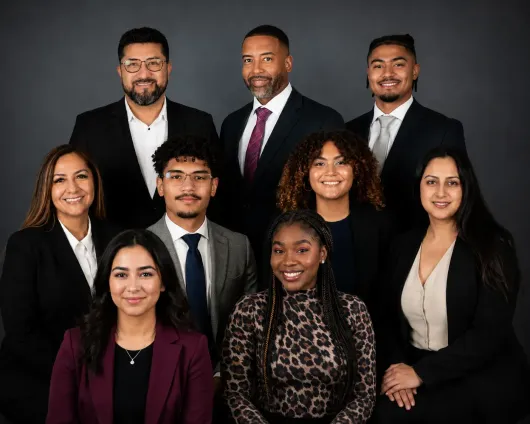
Decades of experience guiding immigration cases. Focused on protecting your future and your family. Clear guidance through every step of the process. So you can move forward with confidence.
Passionate Immigration Lawyer in Chicago Lawyer in Chicago
If you need a Chicago immigration lawyer, you are likely facing one of the hardest moments your family has ever seen. Maybe a loved one was picked up by ICE. Maybe a green card case stalled. Maybe an old criminal charge is blocking a path to status. Gilliam Law helps Chicago families in every one of these situations.
Proven Immigration Experience
Recognized by leading legal organizations and trusted by thousands of clients.

Experienced Chicago Immigration Lawyer Fighting for Families Across Illinois
Gilliam Law is a family-run immigration practice based in Chicago. We represent clients in front of USCIS, the Chicago Immigration Court, the Board of Immigration Appeals, and ICE. Our focus is family-based immigration and the defense of people facing removal. We take cases in Chicago, Addison, and Franklin, Tennessee, and we handle matters across the country when a client needs us to travel.
What a Chicago Immigration Attorney Does for You
A Chicago immigration attorney does more than fill out forms. The forms matter, but the strategy behind them matters more. We look at your full history, your family ties, your work record, and any criminal background before we recommend a path forward. One wrong filing can trigger a removal case, so the first decision is often the most important one.
We also speak for you when you cannot speak for yourself. That means appearing at USCIS interviews, arguing bond motions, cross-examining government witnesses in immigration court, and writing legal briefs when your case goes up on appeal. If your loved one is in detention, we act fast to find them, file for bond, and start building a release plan.
Every client gets a real attorney working on their case. You will not be passed off to a paralegal for every question. Solomon personally reviews the strategy on removal defense files and appears in court when the case calls for it.
When to Hire an Immigration Lawyer in Chicago
The best time to hire a Chicago immigration lawyer is before something goes wrong. Most people call us after something has already happened. Both situations are workable, but the earlier we get involved, the more options you have.
You should call a lawyer right away if ICE has detained a family member, if you received a Notice to Appear in immigration court, or if USCIS sent you a Request for Evidence you do not understand. You should also call before filing any application if you have a criminal record, a prior removal order, or a history of immigration violations. Filing the wrong form in those situations can put you in front of an immigration judge.
Even stable cases deserve a second look. Marriage green cards get denied over small paperwork mistakes. Naturalization applications get flagged over old misdemeanors. A short consultation can save years of trouble.
How Gilliam Law Approaches Every Chicago Immigration Case
We start every case the same way. We listen. Before we recommend anything, we want to understand who you are, who your family is, and what outcome would change your life. That conversation shapes the whole strategy.
From there, we map out the realistic options. Some cases have a clear path. Others have three or four possible routes, each with tradeoffs. We explain each one, tell you what we would do in your position, and then let you decide. You are the client. The case is yours.
Once you hire us, we keep you informed at every stage. You will know when we file something, when we hear back, and what comes next. If we hit a setback, you will hear it from us first. That is how a Chicago immigration law firm should run, and it is how we run ours.
Our Immigration Services
From initial filings to final decisions, we guide you through every stage of your immigration case.
Family Immigration Lawyer in Chicago
Family immigration is the heart of what we do at Gilliam Law. Most of our Chicago clients come to us because they want to bring a spouse, parent, child, or sibling to the United States, or they want to secure status for a family member already here. We handle every stage of the family immigration process, from the first petition through the green card interview and beyond.
Marriage green cards are the most common family petitions we file in Chicago. They are also the ones who get denied most often over small mistakes. USCIS looks hard at marriage cases, and officers are trained to spot anything that suggests the marriage was filed for immigration benefits alone. A strong application tells the real story of your relationship with the documents to back it up.
We prepare every marriage green card case with that scrutiny in mind. We help you gather joint financial records, photos, lease agreements, and affidavits from people who know you. We also prepare you and your spouse for the USCIS interview so you walk in ready, not nervous. The goal is simple. We want the officer to close your file with no doubts.
Filing a Marriage-Based Green Card from Inside the United States
If your spouse is already living in the United States and entered lawfully, you can usually file for a green card without leaving the country. This process is called adjustment of status. We file the I-130 petition and the I-485 application together, along with the work permit and travel document requests. Your spouse can stay in Chicago, work legally, and travel while the case is pending.
Adjustment of status is not available in every case. If your spouse entered without inspection or has certain immigration violations, a different path may apply. We review your full history before filing so no one is surprised later.
Consular Processing for Spouses Living Abroad
If your spouse lives outside the United States, the case goes through consular processing. We file the I-130 with USCIS, then the case moves to the National Visa Center and finally to the U.S. consulate in your spouse's home country. Your spouse attends the interview abroad and enters the United States as a lawful permanent resident.
Consular processing has its own risks, especially if there is any history of unlawful presence in the United States. We often pair consular processing with a provisional waiver to protect clients from long separations. We will walk you through the timeline before you commit to a path.
The K-1 fiancé visa lets you bring your fiancé to the United States to get married and then apply for a green card. It sounds simple, and in the right case, it is. But K-1 cases are paperwork-heavy and time-sensitive. You have ninety days to marry after your fiancé arrives, and you have to file the green card case right after.
We handle the full K-1 process for Chicago clients. We file the I-129F petition, prepare you for the consular interview, and then file the adjustment of status case once your fiancé is in the country. We also help couples decide between a K-1 visa and a marriage-based green card, which is not always the obvious choice.
Marriage cases get most of the attention, but family immigration covers more than spouses. U.S. citizens can petition for parents, children, and siblings. Green card holders can petition for spouses and unmarried children. The rules and wait times vary a lot depending on the relationship.
We file these petitions every week for Chicago families. The filing itself is usually straightforward. The harder part is explaining what comes next, because some family categories move quickly and others take years. You deserve a real answer before you file.
Immediate Relative Petitions Explained in Plain English
Immediate relatives of U.S. citizens have no wait for a visa number. That group includes spouses, unmarried children under twenty-one, and parents of adult citizens. These cases usually move in months, not years, and the beneficiary can often adjust status inside the United States if they qualify.
If you are a U.S. citizen in Chicago petitioning for an immediate relative, we can often get the full case done in under a year. We file everything together and track the case through to the interview.
Family Preference Categories and Wait Times
Other family relationships fall into what USCIS calls preference categories. These include adult children of citizens, spouses and children of green card holders, and siblings of citizens. Each category has a yearly cap, which creates long waits. Some categories run more than a decade behind.
We check the monthly visa bulletin before we file and give you a realistic timeline. We also watch your case over the years and let you know when your priority date is close. If your life changes during the wait, like a marriage or a child aging out, we adjust the strategy.
Adjustment of status is how a person already in the United States becomes a lawful permanent resident without leaving. It is the final step in many family cases, and it is where a lot of cases run into trouble. Old entries, old arrests, and old paperwork mistakes all surface during adjustment.
We prepare adjustment cases with the full history in mind. If there is a problem, we address it before filing, not after. In some cases, we pair the adjustment with a waiver. In others, we recommend holding off until a safer path opens up. The point is to file when you are ready to win, not before.
CLIENT STORIES
Chicago Deportation Defense Lawyer for Detained and Non-Detained Clients
Deportation defense is the most urgent work we do at Gilliam Law. When a family calls us about a loved one in ICE custody, the clock is already running. Bond hearings get scheduled fast. Master calendar hearings come up without much notice. Every day matters, and every decision shapes the rest of the case.
We represent both detained and non-detained clients in the Chicago Immigration Court. Solomon Gilliam appears in person and has handled removal cases across the country. Whether your loved one was picked up at home, at work, or at a traffic stop, we know how to step in quickly and start building a defense.
The first hours after an ICE arrest are the hardest. Families panic, phones stop working, and nobody seems to have real answers. The most important thing you can do is stay calm and call an immigration lawyer right away. Do not sign anything ICE puts in front of your loved one until a lawyer reviews it. Some forms waive the right to see a judge.
Write down everything you know. When and where the arrest happened. What officers said. Whether your loved one has any prior removal orders or criminal history. That information helps us act fast once you call.
First Steps After an ICE Arrest in Cook County
After an ICE arrest in Cook County, your loved one is usually transferred out of the area within days. ICE does not hold people in Chicago long-term. Most detainees end up at facilities in Indiana, Wisconsin, or farther. That transfer window is when we push hardest to file for bond and get the case in front of a judge.
We also work with the family on the home side. Bond hearings require proof of community ties, steady housing, and family support. We help you gather letters, tax records, and sponsor documents before the hearing so nothing slows the case down.
Locating a Loved One in ICE Detention
ICE runs an online detainee locator, but it does not always update quickly. If your family member was just arrested, the system may show nothing for a day or two. We use the locator alongside direct contacts at detention facilities to track people down faster. Once we find them, we file a notice of appearance so ICE and the court know we represent them.
Finding a detainee is only the start. Once we have the location, we get the A-number, request the file, and start preparing for the bond hearing. Every step moves the case closer to a release plan.
A bond hearing is your first real chance to get a detained loved one home. The judge decides two things. Is your family member a flight risk, and are they a danger to the community. If the answer to both is no, the judge can set a bond and release them while the case continues.
We prepare bond hearings with care. We gather letters from family, employers, pastors, and community members. We pull tax returns and pay stubs. We explain the person's ties to Chicago, their clean record, and their reason to show up in court. Judges respond to real stories backed by real documents, and that is how we build every bond packet.
The Chicago Immigration Court handles thousands of removal cases. Dockets are crowded, hearings get rescheduled, and judges vary a lot in how they run their courtrooms. A lawyer who appears there regularly knows the local practice and knows what each judge expects. We bring that experience to every case we take.
Removal cases move in stages. Most start with a master calendar hearing, move to pleadings, and end with an individual merits hearing where the judge decides the case. We prepare you for each stage so nothing catches you off guard.
Master Calendar Hearings at 525 West Van Buren
Master calendar hearings are short, but they matter. This is where you enter pleadings, state your defenses, and set a schedule for the rest of the case. If you go in without a lawyer, you can accidentally waive rights or miss a defense that would have worked.
We handle master calendar hearings for Chicago clients every week. We file the right pleadings, raise every defense that fits your case, and set a timeline that gives us room to prepare. You walk out knowing exactly what comes next.
Individual Merits Hearings and What to Expect
The individual merits hearing is the trial in an immigration case. The judge hears testimony, reviews evidence, and decides whether you stay or go. These hearings can run several hours. You testify, your family testifies, and the government cross-examines each witness.
We prepare you for merits hearings through practice sessions. You will know the questions before you hear them in court. We also submit a full evidence packet ahead of time, including country conditions reports, hardship declarations, and expert letters when they apply. A good merits hearing is won before you ever walk into the courtroom.
Cancellation of removal is one of the strongest defenses in immigration court. It lets some long-term residents stay in the United States even after they are placed in removal proceedings. The rules are strict, and the evidence bar is high, but many Chicago families qualify and do not know it.
We screen every removal case for cancellation eligibility. If it fits, we build the case around the hardship your removal would cause to your U.S. citizen or green card family members. That hardship has to be more than the normal pain of family separation. We know what Chicago judges look for and how to present it.
Some clients come to us after fleeing danger in their home country. Asylum, withholding of removal, and relief under the Convention Against Torture are all defenses we raise in Chicago Immigration Court. Each one has its own standard and its own evidence requirements.
We work with clients to document the threats they faced, gather country conditions evidence, and prepare detailed declarations in their own words. Asylum cases are won on credibility and detail. We make sure your story is told the way it needs to be told.
Areas We Serve as an Immigration Law Firm
Gilliam Law represents immigration clients across Chicago, the surrounding suburbs, and beyond. We have three offices. Our main office is on the South Side of Chicago. Our second Illinois office is in Addison, serving DuPage County and the western suburbs. Our third office is in Franklin, Tennessee, serving the greater Nashville area. Immigration law is federal, so we can take cases anywhere in the country when a client needs us to travel.
Most of our work happens in Illinois, and most of our Illinois work runs throughout Chicago. Wherever you live, we can represent you in court, at USCIS interviews, and at ICE check-ins. The service areas below show where we focus, but if you do not see your city or neighborhood listed, call us anyway. We likely serve it.

We serve clients across every part of Chicago and the surrounding Cook County suburbs. Our team speaks Spanish fluently, which matters in neighborhoods where Spanish is the first language at home. Clients can walk in, call, or email and explain their case without switching languages to be understood.
Chicago families often come to us with the hardest cases. ICE enforcement in the area has been heavy for years, and many households include a mix of U.S. citizens, green card holders, and family members without status. We take those cases seriously because we live and work in the same community.
Immigration Help for Families on Chicago's South Side
We serve clients in Back of the Yards, Brighton Park, McKinley Park, Gage Park, New City, and Bridgeport. These are the neighborhoods we know best, and they are where many of our longtime clients live.
South Side clients often find us through word of mouth. One family hires us for a marriage green card, then sends a cousin facing a bond hearing, then sends a neighbor dealing with an old criminal record. That chain of trust is how we built the practice, and it is how we keep building it.
Serving Pilsen, Little Village, and the Lower West Side
Pilsen and Little Village are two of the most important Latino neighborhoods in Chicago. Generations of families have built their lives in those blocks, and immigration touches almost every household in some way. We serve clients across 18th Street, 26th Street, and the surrounding areas every week.
We also handle cases in the Lower West Side, Heart of Chicago, and the blocks near the Cook County courthouses where many of our crimmigration cases start. Clients from these neighborhoods often come to us after a criminal arrest, and we work fast to protect their status before a plea is entered.
Immigration Attorney for the North and Northwest Sides of Chicago
We also represent clients on the North and Northwest Sides. That includes Albany Park, Avondale, Belmont Cragin, Hermosa, Logan Square, Humboldt Park, and the surrounding neighborhoods. These areas have some of the most diverse immigrant communities in the city, with families from Mexico, Central America, Eastern Europe, the Middle East, and South Asia.
Our Chicago office is a short drive or train ride from most of these neighborhoods. For clients who cannot come in person, we handle most of the intake and document review remotely. What matters is the case, not the commute.
Serving Cook County Suburbs Across the Chicago Metro Area
Beyond the city, we take cases across Cook County and the wider metro area. That includes Cicero, Berwyn, Oak Park, Forest Park, Melrose Park, Stone Park, Maywood, Bellwood, Franklin Park, Schiller Park, Stickney, Summit, Burbank, Evergreen Park, Oak Lawn, and the south suburbs.
We also serve clients in Lake County and Will County when the case fits. Distance is rarely a barrier in immigration work. Most filings happen by mail or online, and hearings are centralized in Chicago.
Our Addison office serves clients in DuPage County and the western suburbs. DuPage County has a large and growing immigrant population, and many families commute between the suburbs and Chicago for work. Having a second office in Addison lets us meet clients closer to home and cut down on travel for families who already have enough on their plates.
All of our Addison cases still run through the Chicago Immigration Court when they reach that stage, and Solomon appears there in person. The Addison office handles the same full range of services as our Chicago location. Family immigration, removal defense, deportation defense, waivers, and pardons.
Immigration Lawyer Serving Addison, Bensenville, and Elmhurst
From our Addison office, we cover Addison, Bensenville, Elmhurst, Villa Park, Lombard, Wood Dale, Carol Stream, Glendale Heights, and the surrounding towns. Many clients in these communities work in the logistics, manufacturing, and service industries that drive the western suburbs, and they need a lawyer who understands both the federal system and the local courts.
We take walk-in consultations by appointment and schedule evening meetings when we can. If you work long hours and cannot make it downtown, the Addison office is built for you.
Serving Kane County, Will County, and the Far Western Suburbs
We also represent clients in Kane County, Will County, and the far western suburbs, including Wheaton, Naperville, Aurora, Elgin, and Joliet. These clients can use either the Addison or Chicago office, depending on travel and preference.
We serve clients across Franklin, including Williamson County, Davidson County, and the greater Nashville area. Middle Tennessee has one of the fastest-growing Latino populations in the country, and demand for experienced, bilingual immigration lawyers is high.
We handle family immigration, removal defense, waivers, and pardons for Tennessee clients the same way we handle Illinois cases. The location is different. The commitment is the same.
Immigration Representation in Franklin, Brentwood, and Spring Hill
From our Franklin office, we serve clients in Franklin, Brentwood, Spring Hill, Thompson's Station, and the surrounding Williamson County communities. These towns have grown fast, and many of the families who came for work are now dealing with immigration questions nobody in their circle can answer.
We meet clients at our Franklin office or by video when that works better. Document exchange is handled through our secure client portal, so clients do not need to make extra trips for paperwork.
Serving Nashville, Murfreesboro, and Middle Tennessee
We also represent clients in Nashville, Murfreesboro, Smyrna, La Vergne, Antioch, and across Davidson and Rutherford Counties. Tennessee removal cases go through the Memphis Immigration Court, and we appear there for our Tennessee clients when hearings are scheduled.
If you live in Middle Tennessee and need an immigration lawyer who speaks Spanish, has courtroom experience, and takes the hard cases, our Franklin office is open to you.
Immigration law is federal, which means a Chicago immigration lawyer can represent clients in front of USCIS and immigration courts anywhere in the United States. Solomon has appeared in removal cases from Seattle to Houston to Buffalo. When a client outside our main service area needs representation, we take the case if we can do the work well.
Out-of-state clients usually reach us through a referral, a review, or a family member we already represent. The intake is done by phone or video. Documents move electronically. If a court appearance is required, we travel or arrange local counsel. What does not change is how we build the case and who stands in front of the judge.
Spanish Speaking Immigration Lawyer in Chicago
Chicago is home to hundreds of thousands of Spanish-speaking immigrants. Many have lived here for decades, raised U.S. citizen children, and built real lives. When they need an immigration lawyer, they deserve one who can speak with them directly. Not through a family member translating on a phone. Not through a receptionist guessing at the details. Directly, in their own language, about the case that will shape their future.
Si usted necesita un abogado de inmigración en Chicago que hable español, Gilliam Law está aquí para ayudarle. Representamos a familias latinas en casos de inmigración familiar, defensa de deportación, defensa de remoción, perdones, y waivers. Atendemos clientes en Chicago, Addison, y Franklin, Tennessee. Hablamos con usted directamente sobre su caso, sus opciones, y los próximos pasos.
Solomon Gilliam aparece personalmente en la Corte de Inmigración de Chicago en 525 West Van Buren. Si su ser querido está detenido por ICE, llame a nuestra oficina hoy. Cada día cuenta en un caso de detención, y estamos listos para actuar rápido. Luchando por las Familias.
Immigration cases are built on stories. A client has to explain what happened, who their family is, and why they deserve to stay. When the client tells that story in a second language, details get lost. Nuance disappears. Judges and officers read flat declarations that do not sound like real people. Cases get weaker for no good reason.
We avoid that problem by working in the client's own language. A client who can speak freely gives us the facts we need to build a strong case. They catch mistakes we might miss. They tell us things they would never say through an interpreter. That trust shows up in the filings, in the testimony, and in the final result.
Our Chicago office sits in a neighborhood where most of our neighbors are Latino. We know the community because we are part of it. We serve families in Pilsen, Little Village, Back of the Yards, Brighton Park, Cicero, Berwyn, and every other neighborhood where immigration is part of daily life. We also serve families in the suburbs through our Addison office, which covers DuPage County and the surrounding area.
The work is personal. Solomon raises four children in the Chicago area with his wife, whose family came from Guatemala. That is not a marketing line. It is why we take family immigration seriously and why Spanish-language service is built into every part of what we do. When you call Gilliam Law, you are calling a firm that understands your family because ours looks a lot like yours.
Why Choose Gilliam Law as Your Chicago Immigration Law Firm
Chicago has dozens of immigration law firms. Some run high-volume operations where clients never meet the lawyer whose name is on the door. Others focus on employment visas and treat family cases as an afterthought. A few are excellent. Most fall somewhere in the middle. Gilliam Law is built for the clients who want a real lawyer on their case, not a file number in a queue.
We picked the work we wanted to do and built the firm around it. Family immigration, removal defense, deportation defense, waivers, and pardons. Those five areas are what we handle every day, and they are the areas where experience changes outcomes. If your case fits what we do, you will not find a firm more invested in getting it right.
Gilliam Law is family-run in the literal sense. Solomon Gilliam leads the firm as the attorney and founder. His wife, Nancy, works alongside him as a partner. Their children contribute to the practice as they grow into it. The office feels like an extension of their home, because it is one. That structure shapes how we treat clients.
You will not get handed off to a rotating team of paralegals who have never read your file. You will work with the same people from start to finish. When you call, someone who knows your case picks up. When you come in, we remember who your family is. That kind of continuity is rare in immigration law, and it matters most when cases get hard.
Solomon Gilliam has practiced law since 2011. He started in criminal defense at a Cook County boutique, then trained in removal defense in Houston, then brought both skill sets back to Chicago. That mix is rare in immigration law. Most immigration lawyers never set foot in criminal court. Most criminal lawyers never argue a bond hearing. Solomon has done both, for years.
That background changes how we handle crimmigration cases, bond hearings, and clients with complicated records. We see the criminal side and the immigration side together, and we make decisions that protect both. Clients with old convictions get real answers instead of guesses. Clients facing new charges get strategy that protects their status before a plea is signed.
Some immigration firms file paperwork and avoid court. We do not. Solomon personally appears in the Chicago Immigration Court at 525 West Van Buren and has argued removal cases in courts across the country. We take bond hearings, master calendar hearings, merits hearings, and appeals. We prepare clients to testify and we prepare witnesses to back them up.
Courtroom work is where cases are actually won or lost. A well-written brief helps, but the judge watches the lawyer and the client in the room. We walk into every hearing ready for the questions, the objections, and the curveballs. That is what our clients pay for, and that is what we deliver.
The people who work at Gilliam Law answer the phone because they want to help. That sounds obvious, but anyone who has called a large law firm knows it is not. Our team is trained to treat every caller with respect, especially those who are scared or confused. Many of our clients are calling a lawyer for the first time in their lives. We never forget that.
Empathy is not a soft skill in immigration work. It is how you build the trust that lets a client share the hard parts of their story. Without that trust, the case suffers. With it, we get the facts we need to win. That is why we hire people who care, and that is why our clients come back to us for the next case and send their cousins, neighbors, and coworkers too.
Speak With a Chicago Immigration Lawyer Today
If you are looking for a Chicago immigration lawyer, the next step is simple. Call Gilliam Law or book a consultation online. We will listen to your situation, explain your options in plain English or Spanish, and tell you what we can do. There is no pressure and no script. Just a real conversation with a lawyer who handles these cases every day.